
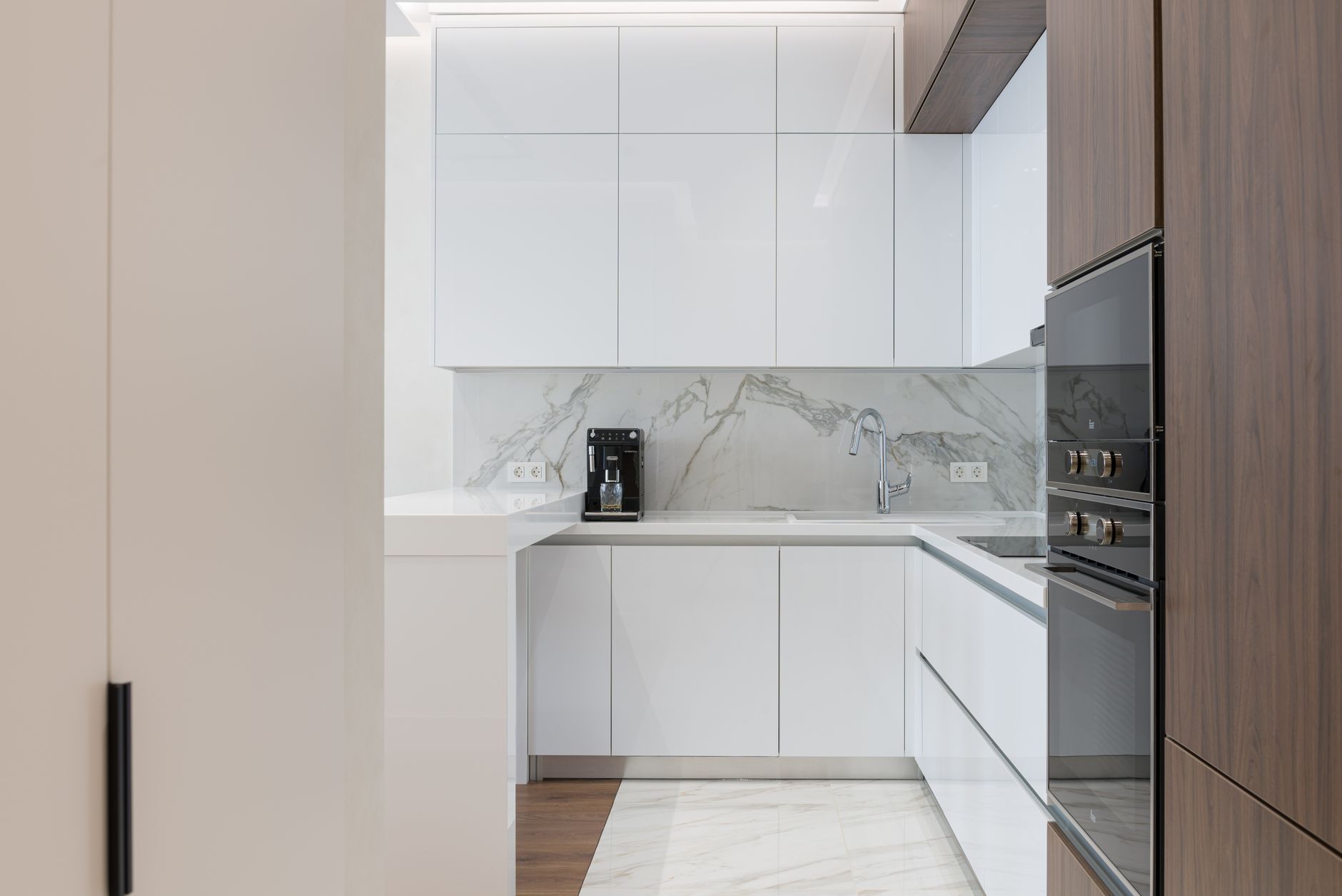
Three materials keep coming up for kitchen counters, and people usually choose on looks and then live with the maintenance. It is worth understanding what you are signing up for before the slab is cut.
Marble
Marble is calcium carbonate, which means acid reacts with it. Lemon juice, wine, vinegar or a tomato left on the counter will etch the surface: a dull mark where the polish has been eaten away. Sealing does not prevent this, because etching is a chemical reaction with the stone itself, not a stain soaking in.
Some people love what happens next. Marble develops a patina, and in a working kitchen that patina arrives within months. If that sounds like character, marble is a fine choice. If it sounds like damage, choose something else, because it starts early and it does not stop.
Quartzite
Quartzite is a natural stone, harder than marble and far less reactive. It gives you the flowing veining people want from marble with the durability of granite. That combination is why it keeps gaining ground.
One caution: some material sold as quartzite is actually softer dolomitic marble. Ask, and if the answer is vague, test a sample with a little lemon juice in an inconspicuous spot.
Engineered quartz
Engineered quartz is ground stone bound with resin. It does not need sealing, does not etch, and looks the same from one end of the run to the other.
The trade-off is heat. The resin has a limit, and a pan straight off the burner can leave a permanent mark. Natural stone does not care about heat; engineered quartz does.
A short way to decide
If the kitchen gets heavy daily use and nobody wants to think about it: engineered quartz. If you want natural stone that can take the abuse: quartzite. If you want marble and you genuinely accept that it will change: marble, and enjoy it.
All three are on the racks here in Tacoma. It is worth seeing them side by side before you commit.