
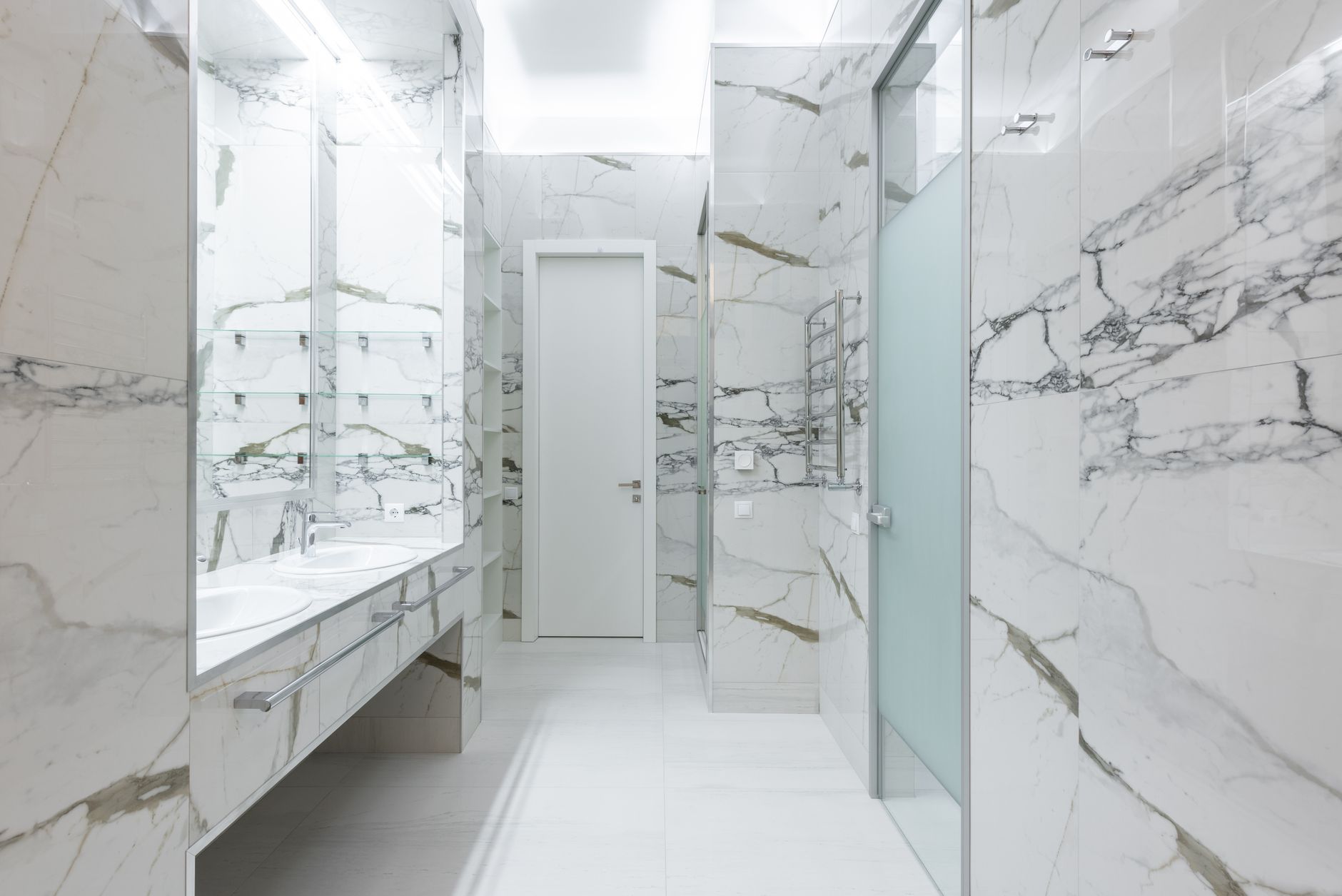
The same slab can look like three different materials depending on how the surface is finished. The finish changes the colour, the maintenance and how the stone feels underhand.
Polished
Ground to a reflective shine. Polishing brings out the depth of colour and makes veining look sharper. It is also the least porous of the three, because the pores are closed up by the process.
The downside is that it shows everything: fingerprints, water spots, and on marble, every etch mark. A polished surface is a mirror, and mirrors show scratches.
Honed
Ground smooth but stopped before the shine. Honed stone is matte, softer looking, and much more forgiving about fingerprints and water spots.
Two things to know. It washes out some colour, so a dark granite will look noticeably lighter honed than polished. And because the pores stay more open, it wants sealing more often.
On marble, honing is often the sensible compromise: etch marks still happen but they are far less visible against a matte surface than against a polish.
Leathered
Brushed after polishing, which leaves a soft texture and a low sheen. Leathering keeps most of the depth of colour that honing removes, while hiding marks the way a matte finish does.
It has become the default on dark granite islands for exactly that reason. The texture is subtle enough to read as a finish rather than a feature.
Choosing
Dark stone that has to stay dark: polished or leathered. Marble you want to be relaxed about: honed. A floor that needs grip: honed or leathered, never polished.
We can show you the same material in more than one finish. Seeing them next to each other settles the question faster than any description.